
 Share
Share 



Higher-risk wagers made up just 16% of craps bets but generated approximately 38% of casino profit in a Hard Rock Bet study covering Michigan and New Jersey.
Hard Rock Bet released its report on Sept. 30, analyzing more than 3.3 million craps bets in Michigan and New Jersey between April and June. Its betting figures combine both states rather than providing separate Michigan results.
For Michigan online craps players, the findings highlight why the type of bet matters. Wagers on the same table can carry very different costs, even when the potential payouts look appealing.
Popular craps bets do not always offer the best value
Place bets represented 39% of wagers in the study. These bets back a particular number appearing before a seven.
Place 6 and Place 8 together accounted for 43.5% of Place bets, compared with 22.9% for Place 4 and Place 10.
However, the Field was the most frequently selected individual wager, ahead of each individual Place bet and the Pass Line. One-roll proposition bets on two, three, 11, and 12 collectively made up more than 20% of selections.
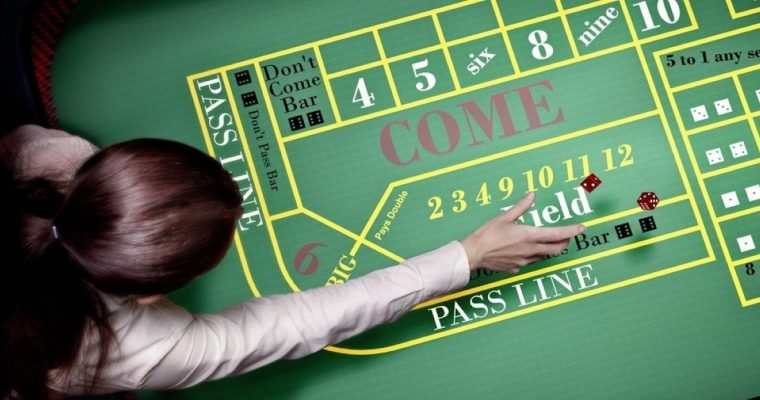
A Field bet covers two, three, four, nine, 10, 11, and 12 on the next roll. That broad coverage can look appealing, but it loses on five, six, seven, and eight. Those four losing totals account for more possible dice combinations than the seven winning totals.
Field bets generally pay even money, with larger payouts on two and 12. Players should check the game’s pay table because different payouts change the casino’s advantage.
What the house edge means for players
The house edge is the casino’s built-in advantage on a wager over time. Comparing that advantage helps players look beyond the advertised payout and understand how much a bet is expected to cost over repeated play.
Under standard craps rules, common bets have the following house edges:
- Pass Line: approximately 1.41% house edge.
- Don’t Pass: approximately 1.36%.
- Place 6 or Place 8: approximately 1.52%.
- Place 4 or Place 10: approximately 6.67%.
- Any Seven: approximately 16.67%.
For example, the Any Seven wager wins when the next roll totals seven. There are six ways to roll seven among 36 possible two-dice combinations, but its usual 4-to-1 payout falls short of the fair 5-to-1 payout.
A 16.67% house edge translates to an expected loss of roughly $16.67 for every $100 wagered over many bets. It does not predict the result of a particular $100 session.
Odds bets offer fair payouts but still carry risk
Odds bets represented just 2% of selections in Hard Rock Bet’s study.
These are additional wagers attached to a Pass Line, Don’t Pass, Come, or Don’t Come bet after a point is established. They pay according to the actual probability of winning, giving the casino no mathematical advantage on the additional wager.
For a Pass Line or Come odds bet, the payout depends on the point: 2-to-1 on four or 10, 3-to-2 on five or nine, and 6-to-5 on six or eight.
A zero house edge does not guarantee a win. Adding odds puts more money at risk, and the original line bet still carries its own casino advantage.
Michigan players can use responsible gambling tools to set deposit, wagering, and time limits before playing. A lower house edge can reduce the expected cost of a bet, but the amount wagered and the length of a session also matter.