
 Share
Share 



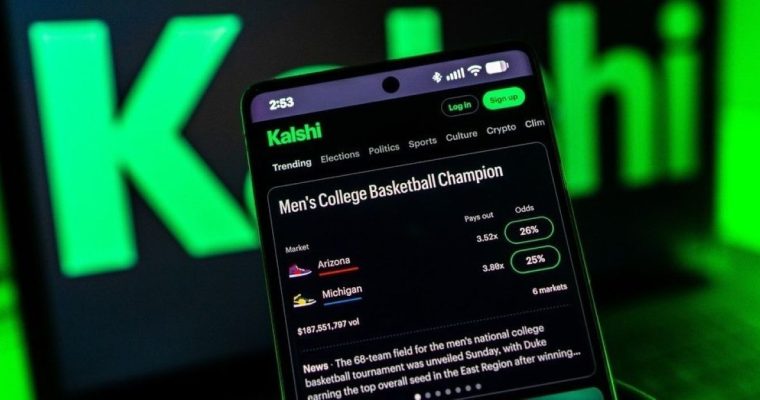
Michigan has secured restrictions on sports event contracts offered through Coinbase, Robinhood, and Kalshi.
A Reuters/Ipsos poll reported Oct. 12 found that 45% of Americans supported stricter regulation of prediction markets, while 9% opposed it.
Another 42% took no position on tighter rules. An event contract pays according to whether a specified outcome occurs, such as a sports result or an election.
The Ipsos study gathered responses from 4,506 adults across the United States during Sept. 30-Oct. 5. Participants answered questions about government oversight, the types of events people should be able to wager on, and whether the activity constitutes gambling.
Michigan agreements set October deadlines for sports positions
The Michigan Gaming Control Board announced Oct. 7 that Coinbase had agreed to stop offering sports contracts and close remaining Michigan customer positions by midnight Eastern Oct. 10.
That deadline has now passed. The terms applied to sports contracts traded on KalshiEX and other exchanges.
Robinhood’s earlier agreement required an end to new sports contracts by the close of Sept. 9, with outstanding positions closed by Oct. 9.
Separately, a September preliminary injunction against Kalshi required the exchange to block access to its sports contracts for Michigan residents and people within the state.
The Coinbase arrangement leaves the underlying disagreement over regulatory authority unsettled. Michigan agreed to withhold enforcement against the company while it follows the deal and the related appeals remain pending.
The MGCB’s announcement did not specify the prices Coinbase would use to close outstanding positions. Customers reviewing those transactions can consult account notices or ask Coinbase about the treatment of their holdings.
Sports contracts attract more support than government wagers
For professional sports, 29% supported prediction market wagering and 43% opposed it. For college sports contracts, the figures were 26% in favor and 46% against.
Both questions concerned sports outcomes traded through prediction markets, rather than wagers placed with conventional sportsbooks.
Support was substantially lower for the three government-related categories surveyed:
- Election results: 13% supported wagering and 60% opposed it.
- Government policy announcements or decisions: 9% supported it and 63% opposed it.
- U.S. military actions: 8% supported it and 65% opposed it.
Election market opposition extended to majorities in both parties: 61% of Republicans and 69% of Democrats.
The survey separately examined participation by political insiders. Only 6% considered political wagering by members of Congress and their staff appropriate, while 88% considered it inappropriate. For the president and administration officials, 7% called political wagering appropriate and 88% called it inappropriate.
Gambling classification remains central to the regulatory dispute
When respondents were asked to classify wagering through prediction markets, 75% answered that it was gambling. Just 8% answered otherwise, and 14% were uncertain.
MGCB Executive Director Henry Williams said Coinbase’s withdrawal “underscores Michigan’s commitment to enforcing its gaming laws.” He described the agreement as part of the state’s response to sports contracts offered without Michigan licenses.
Michigan’s regulators maintain that sports contracts require the same state oversight as other sports wagering products. The companies contesting those restrictions argue that federal commodities regulation governs their offerings.
Before placing a wager through a licensed Michigan sports betting app, a customer must be 21 or older and have their identity and location verified. MGCB supervision is part of the licensing system that Michigan officials say sports contract providers must also follow.